



Pregnancy Care in Nagpur at Gandhi Nursing Home: A Complete Guide from Early Pregnancy to Delivery
Pregnancy is an important journey that requires regular medical supervision, appropriate investigations, healthy lifestyle practices, and timely maternity care. From the first confirmation of pregnancy to delivery and postpartum recovery, every stage has different needs. Proper pregnancy care helps identify potential concerns early, monitor the health and development of the baby, and prepare the mother for normal delivery or Caesarean delivery when clinically appropriate.
At Gandhi Nursing Home, pregnancy care can involve coordinated Gynaecology & Obstetrics services, antenatal monitoring, assessment of high-risk pregnancies, delivery planning, and women’s healthcare. Choosing an Experienced Gynaecologist and maintaining regular antenatal appointments are important parts of a healthy pregnancy journey.
What Is Pregnancy Care?
Pregnancy care, also called antenatal or prenatal care, refers to the medical supervision provided throughout pregnancy. It begins after pregnancy is confirmed and continues until delivery and the immediate postpartum period. The purpose is to monitor maternal health, assess fetal growth and well-being, identify pregnancy-related complications, and prepare for childbirth.
Pregnancy care is not identical for every woman. A healthy low-risk pregnancy may require routine monitoring, while a woman with previous pregnancy complications, multiple pregnancy, certain medical conditions, fertility treatment history, or other risk factors may require more frequent assessment.
Why Early Pregnancy Care Is Important
The first few weeks of pregnancy are an important period for establishing appropriate antenatal care. An early consultation allows the gynaecologist or obstetrician to review the mother’s medical history, previous pregnancies, menstrual history, conception history, and any existing risk factors.
Early pregnancy assessment can also help determine the approximate gestational age and identify whether additional monitoring or investigations are appropriate. Women should not wait for significant symptoms before arranging their first pregnancy consultation.
Common Early Pregnancy Symptoms
Pregnancy symptoms vary considerably between women. Some women experience several symptoms, while others may have very few symptoms during the early weeks. Common symptoms can include:
- Missed or delayed menstrual period
- Nausea or vomiting
- Breast tenderness or changes
- Increased tiredness
- Increased urinary frequency
- Mild abdominal or pelvic discomfort
- Changes in appetite or food preferences
- Increased sensitivity to certain smells
- Mood changes
These symptoms can occur in pregnancy but are not sufficient on their own to confirm that a pregnancy is progressing normally. Appropriate medical assessment is important, especially when symptoms are severe or unusual.
First Pregnancy Visit: What Can Be Expected?
The first pregnancy consultation generally focuses on establishing the mother’s health profile and understanding the pregnancy. The doctor may discuss the date of the last menstrual period, previous pregnancies, previous surgeries, existing medical conditions, family history, conception history, and current symptoms.
Depending on the clinical situation, the healthcare team may recommend appropriate blood tests, urine evaluation, ultrasound assessment, or other investigations. The exact investigations and timing vary according to gestational age and individual circumstances.
- Pregnancy confirmation and dating
- Maternal medical history review
- Previous pregnancy and delivery history
- Assessment of current symptoms
- Maternal blood pressure and general health assessment
- Appropriate laboratory investigations
- Ultrasound assessment when clinically indicated
- Identification of high-risk pregnancy factors
- Discussion of future antenatal appointments
Pregnancy Care During the First Trimester
The first trimester extends through approximately the first 12 to 13 weeks of pregnancy. During this period, the pregnancy becomes established and early fetal development takes place. Antenatal care focuses on confirming pregnancy location and viability when appropriate, estimating gestational age, reviewing maternal health, and identifying potential risk factors.
Women may experience nausea, vomiting, tiredness, breast changes, increased urination, or mild discomfort. However, heavy bleeding, severe abdominal pain, fainting, or other concerning symptoms require prompt medical assessment.
Important Assessments During Early Pregnancy
The timing of pregnancy investigations depends on gestational age and individual medical requirements. Depending on the pregnancy, the obstetrician may recommend appropriate ultrasound examinations and screening assessments.
Common areas of assessment can include pregnancy dating, fetal development, maternal health, chromosomal screening where appropriate, and early identification of pregnancy complications. Not every investigation is necessary for every woman, so the maternity team determines the appropriate schedule.
Pregnancy Care During the Second Trimester
The second trimester generally covers approximately weeks 14 through 27. For many women, early pregnancy symptoms may become less prominent during this period. The pregnancy becomes more visibly established, fetal movements may become noticeable, and antenatal monitoring continues.
The doctor may monitor maternal weight, blood pressure, fetal growth, symptoms, and other relevant parameters. Depending on gestational age and clinical requirements, an anomaly scan may be performed to evaluate fetal anatomy.
Women should continue attending scheduled appointments even when they feel well because some pregnancy complications may initially have few or no obvious symptoms.
Anomaly Scan and Fetal Development
An anomaly scan, also called a detailed fetal anatomy scan, is performed at an appropriate stage of pregnancy to assess the developing baby’s anatomy. It can examine several fetal structures and help identify certain structural abnormalities.
The scan does not guarantee that every possible fetal condition will be detected. It is one component of comprehensive antenatal care and should be interpreted together with the mother’s history, clinical examination, and other appropriate assessments.
Pregnancy Care During the Third Trimester
The third trimester is the period when the pregnancy progresses toward delivery. Antenatal visits become particularly important because the healthcare team monitors maternal well-being, fetal growth, fetal position, symptoms, and preparation for childbirth.
Depending on the pregnancy, the doctor may assess fetal growth, placental position, amniotic fluid, fetal movements, and other relevant findings. Additional ultrasound or fetal monitoring may be recommended when clinically appropriate.
Common Third-Trimester Changes
- Increasing abdominal size
- Fetal movements becoming more noticeable
- Back discomfort
- Pelvic pressure
- Increased urinary frequency
- Difficulty sleeping
- Occasional uterine tightening
- Increasing preparation for labour and delivery
Although many of these changes are common, any sudden or significant change in symptoms or fetal movement should be discussed promptly with the maternity team.
Warning Signs During Pregnancy
Pregnant women should understand the warning signs that require prompt professional assessment. These symptoms do not automatically mean that a serious complication is present, but delaying evaluation can be unsafe.
- Heavy vaginal bleeding
- Severe or persistent abdominal pain
- Leakage of fluid from the vagina
- Severe headache with visual disturbances
- Sudden significant swelling with other concerning symptoms
- Reduced or noticeably changed fetal movements
- Regular painful contractions before the expected time
- Fever or significant illness
- Difficulty breathing or chest discomfort
- Fainting or severe weakness
High-Risk Pregnancy: What Does It Mean?
A high-risk pregnancy is one in which certain maternal, fetal, or pregnancy-related factors increase the possibility of complications or require closer monitoring. High-risk status does not necessarily mean that a woman will experience complications or require Caesarean delivery.
Factors that may lead to closer pregnancy monitoring include:
- Previous pregnancy complications
- Previous Caesarean delivery or uterine surgery
- Multiple pregnancy such as twins
- Certain maternal medical conditions
- Placental abnormalities
- Fetal growth concerns
- Abnormal fetal position
- Pregnancy following certain fertility treatments
- History of recurrent pregnancy complications
Women requiring information about High Risk Pregnancies should receive individualized advice from an obstetrician because the monitoring plan depends on the specific risk factors present.
Role of a Gynaecologist and Obstetrician in Pregnancy Care
An Expert Gynecologist and obstetrician can provide continuity of care throughout pregnancy, monitor maternal and fetal health, identify warning signs, interpret investigations, and guide delivery planning. Regular communication also gives pregnant women an opportunity to discuss symptoms and concerns.
Women choosing maternity care can review information about an Best Gynaecologist and an Experienced Gynaecologist while considering factors such as qualifications, experience, hospital facilities, communication, availability, and the requirements of the pregnancy.
Pregnancy Care After Infertility Treatment
Some women become pregnant after receiving fertility evaluation or assisted reproductive care. Once pregnancy is established, antenatal monitoring continues according to the needs of the pregnancy. IVF pregnancy does not automatically mean that Caesarean delivery is required. The route of delivery depends on maternal and fetal circumstances, fetal position, placental factors, labour progress, previous obstetric history, and other clinical considerations.
Women and couples exploring fertility services can learn about Advanced Fertility & IVF Treatment and Affordable & Advanced IVF Treatment as part of their reproductive healthcare journey.
Infertility Treatment and Pregnancy Planning
Infertility can affect either or both partners and may have female, male, combined, or unexplained factors. A fertility evaluation generally considers the reproductive health of both partners rather than focusing exclusively on the woman.
Depending on the diagnosis, fertility care may involve fertility assessment, ovulation-related evaluation, IUI, IVF, surgical evaluation, or other appropriate reproductive procedures. Couples can explore Complete Infertility Solutions and Infertility Treatment information.
Female and Male Infertility Evaluation
Female Infertility Treatment may require evaluation of menstrual patterns, ovulation, reproductive anatomy, ovarian reserve, age-related fertility factors, and other relevant concerns. Irregular menstrual cycles may sometimes be associated with ovulation problems and can therefore be important during fertility assessment.
Information about Irregular Periods and Their Impact on Fertility can help women understand why menstrual patterns may be relevant to conception.
Male Infertility Treatment may involve assessment of sperm production, sperm count, movement, morphology, reproductive anatomy, and other factors. In selected situations, procedures such as TESA and PESA sperm aspiration may be considered when sperm retrieval is clinically indicated.
IVF, Test Tube Baby and Fertility Centre Services
In-vitro fertilisation (IVF) is an assisted reproductive technique in which fertilization occurs outside the body, followed by transfer of an embryo into the uterus. IVF may be considered for selected fertility conditions after appropriate evaluation. Outcomes can vary according to age, reproductive diagnosis, embryo-related factors, previous treatment history, and other clinical variables.
Patients researching a Best IVF Centre or Best Test Tube Baby (IVF) Centre should consider the fertility team’s expertise, laboratory facilities, counselling, evaluation process, transparency, and individualized care rather than relying only on promotional claims.
Gandhi Nursing Home also provides information regarding the Cocoon Test Tube Baby Centre and fertility-related services.
Egg Donation in Fertility Care
Egg donation may be considered in selected fertility situations when using donor oocytes is clinically appropriate. The process involves medical evaluation, counselling, reproductive planning, and compliance with applicable clinical and regulatory requirements.
Patients considering this approach can learn more about Egg Donation and discuss whether donor-assisted fertility care is appropriate for their circumstances.
Laparohysteroscopy for Selected Infertility Patients
Laparohysteroscopy combines laparoscopic and hysteroscopic assessment in selected patients when structural abnormalities of the reproductive tract are suspected. Depending on the clinical situation, these procedures may help evaluate the uterus, fallopian tubes, ovaries, pelvic structures, or the inside of the uterine cavity.
Not every infertility patient requires surgery. The decision should be based on symptoms, examination, fertility history, imaging findings, and the clinical question being investigated. Patients can read about Laparohysteroscopy for Infertility Patients for additional information.
IUI and Pregnancy Planning
Intrauterine insemination (IUI) is an assisted reproductive procedure in which prepared sperm are placed inside the uterus around the time of ovulation. IUI may be considered for selected fertility situations following appropriate evaluation.
Couples can review information about IUI and discuss whether this fertility approach is appropriate based on their individual reproductive health assessment.
High Success Rate IVF & Fertility Care: Understanding Outcomes
Fertility centres may use terms such as High Success Rate IVF & Fertility Care, but IVF outcomes are not guaranteed. Success can vary significantly according to maternal age, ovarian reserve, sperm factors, embryo characteristics, underlying infertility diagnosis, previous treatment history, and other clinical factors.
Patients should ask fertility specialists how success is measured, which patient group the statistics represent, and whether the figures are directly applicable to their circumstances. Information about High Success Rate IVF & Fertility Care can be considered as part of an informed fertility consultation.
Pregnancy and Delivery Planning at Gandhi Nursing Home
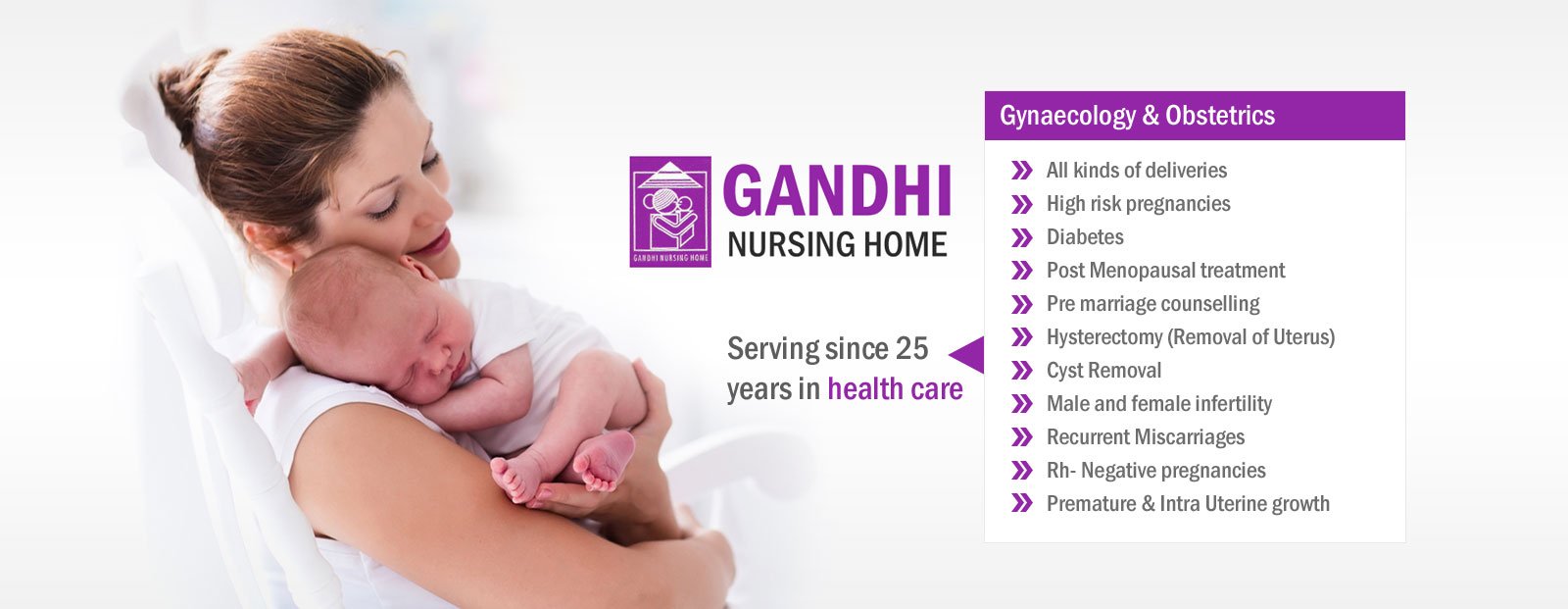
Gandhi Nursing Home in Nagpur started as a women care giving hospital and has evolved into a multispecialty medical centre with advanced surgical facilities. It was established 25 years ago, since 1989, to deliver accessible, high-quality health services in a focused and caring environment. The centre’s women’s healthcare focus includes Gynaecology & Obstetrics, maternity care, fertility services, infertility care, pregnancy monitoring, and surgical healthcare, allowing women to seek appropriate medical guidance across different stages of reproductive and maternal health.
Women planning maternity care can also review information about Best Maternity Hospitals and consider factors such as obstetric expertise, emergency support, maternity facilities, newborn care, surgical capabilities, and continuity of care.
Preparing for Labour and Delivery
As pregnancy approaches full term, the maternity team discusses labour signs, delivery planning, hospital admission, fetal position, and possible delivery routes. The final mode of delivery depends on the mother’s and baby’s condition at that time.
Pregnant women can prepare by keeping important medical records available, understanding when to contact the hospital, arranging transportation, preparing essential items, and discussing their preferences and concerns with the obstetric team.
- Keep antenatal records organized.
- Know the expected delivery period.
- Understand the signs of labour.
- Discuss previous Caesarean or uterine surgery.
- Ask about the baby’s position near term.
- Understand possible normal delivery and Caesarean scenarios.
- Confirm hospital admission procedures.
- Review insurance and cashless requirements where applicable.
Signs That Labour May Be Starting
As the pregnancy approaches delivery, women may experience changes such as regular uterine contractions, increasing pelvic pressure, changes in vaginal discharge, or leakage of amniotic fluid. Not every symptom indicates active labour, so the maternity team should provide individualized instructions about when to reach the hospital.
Heavy bleeding, significant reduction in fetal movements, suspected rupture of membranes, severe pain, or other concerning symptoms require prompt medical assessment.
Normal Delivery at Gandhi Nursing Home
Normal vaginal delivery may be possible when the pregnancy is progressing appropriately, the baby is suitably positioned, and there are no clinical reasons requiring Caesarean birth. During labour, the mother and baby are monitored according to the circumstances.
Information about Cashless Normal Delivery can also help eligible patients understand the administrative and insurance-related aspects of maternity care. Cashless eligibility depends on the applicable insurance policy, hospital network, authorization process, and covered services.
When May Caesarean Delivery Be Recommended?
A Caesarean may be recommended when vaginal delivery could create significant risk for the mother or baby. Possible reasons include abnormal fetal position, certain placental conditions, concerns about fetal well-being, labour that does not progress appropriately, selected previous uterine surgeries, multiple pregnancy in certain circumstances, or other maternal and fetal complications.
A C-section is not automatically required simply because a pregnancy is considered high risk or because conception occurred through IVF. The decision is based on the complete clinical picture.
Women can learn more about Caesarean delivery and discuss their individual delivery plan with their obstetrician.
Cashless C-Section and Cashless Caesarean Services
Some eligible patients may be able to use cashless C-section or cashless Caesarean facilities through applicable insurance arrangements. However, cashless treatment is subject to policy terms, network eligibility, pre-authorisation, covered services, and other insurance conditions.
Patients can review information about Cashless C-Section and Cashless Caesarean and verify their individual eligibility with the hospital and insurance provider.
Postpartum Care After Delivery
Pregnancy care does not end immediately after childbirth. Postpartum care supports the mother’s physical recovery, breastfeeding, emotional well-being, wound or perineal care where relevant, and identification of postpartum complications.
After a Caesarean, additional attention is given to recovery from abdominal and uterine surgery. After vaginal delivery, the mother may also require assessment and support depending on the delivery experience. Every woman should receive individualized postpartum guidance.
Other Women’s Health Services
Comprehensive women’s healthcare includes reproductive health concerns outside pregnancy as well. Women may require assessment for heavy menstrual bleeding, menstrual cramps, breast lumps, irregular periods, infertility, menopause-related concerns, and other gynaecological conditions.
Patients can explore information about Heavy Menstrual Bleeding Treatment, Breast lump Treatment, and Menopause Treatment when seeking appropriate women’s health information.
Frequently Asked Questions About Pregnancy Care
1. When should pregnancy care begin?
Pregnancy care should begin as soon as pregnancy is confirmed or suspected. Early consultation allows the obstetrician to establish gestational age, review maternal health, identify risk factors, and plan appropriate investigations and follow-up.
2. How often should I visit a gynaecologist during pregnancy?
The frequency of antenatal appointments depends on gestational age and individual pregnancy risk. Low-risk pregnancies may follow a routine schedule, while high-risk pregnancies may require more frequent monitoring.
3. What are the most important pregnancy warning signs?
Important warning signs include heavy bleeding, severe abdominal pain, leakage of fluid, significant reduction in fetal movements, severe headache with visual changes, breathing difficulty, or other sudden concerning symptoms. These require prompt medical assessment.
4. Does every pregnant woman need an anomaly scan?
Anomaly scanning is commonly used at an appropriate stage of pregnancy to evaluate fetal anatomy, but the exact investigations recommended depend on the individual pregnancy and clinical circumstances. The obstetrician can explain which scans are appropriate.
5. Does a high-risk pregnancy always require a C-section?
No. A high-risk pregnancy requires appropriate monitoring, but the mode of delivery depends on the specific risk factors, maternal condition, fetal condition, fetal position, labour progress, and other clinical circumstances.
6. Does an IVF pregnancy always require Caesarean delivery?
No. IVF conception alone does not determine the mode of delivery. The decision is based on the same important maternal and fetal considerations that apply to other pregnancies.
7. What is the difference between an obstetrician and a gynaecologist?
Gynaecology focuses on women’s reproductive health, while obstetrics focuses specifically on pregnancy, childbirth, and the postpartum period. Many specialists are trained in both Gynaecology & Obstetrics.
8. What should I look for when choosing pregnancy care in Nagpur?
Important considerations include the doctor’s qualifications and experience, availability of maternity and emergency services, hospital facilities, support for high-risk pregnancies, delivery options, newborn care, communication, and continuity of care.
9. Can women with infertility history have a normal pregnancy?
Yes. Many women who have experienced infertility can have healthy pregnancies. However, the appropriate monitoring depends on the cause of infertility, conception method, maternal health, age, pregnancy history, and other clinical factors.
10. What fertility services may be available before pregnancy?
Depending on individual needs, fertility care may include evaluation of both partners, IUI, IVF, selected surgical evaluation, donor-assisted fertility care, and other appropriate reproductive services. Patients should undergo individualized assessment before selecting a fertility approach.
11. What is TESA and PESA sperm aspiration?
TESA and PESA are sperm-retrieval procedures that may be considered in selected male infertility cases when sperm cannot be obtained adequately through ejaculation. Whether either procedure is appropriate depends on the underlying cause and specialist evaluation.
12. Is cashless maternity care available at Gandhi Nursing Home?
Cashless services may depend on insurance eligibility, hospital network arrangements, pre-authorisation, and policy coverage. Patients should verify the current details with the hospital and their insurance provider before admission.
Complete Pregnancy Care from Early Pregnancy to Delivery
Pregnancy care should be viewed as a continuous journey rather than a series of isolated appointments. Early pregnancy assessment, regular antenatal monitoring, appropriate investigations, identification of high-risk factors, fetal growth assessment, preparation for labour, delivery planning, and postpartum care all contribute to comprehensive maternity care.
Gandhi Nursing Home provides a women’s healthcare and multispecialty environment where patients can seek information and medical guidance relating to Gynaecology & Obstetrics, pregnancy care, normal delivery, Caesarean delivery, high-risk pregnancies, infertility, IVF, IUI, female infertility, male infertility, and other reproductive health concerns. Women should discuss their individual pregnancy and delivery plans with a qualified Gynaecologist or Obstetrician rather than relying on generalized information.
For couples planning pregnancy, fertility-related information is available through services such as Best infertility specialist guidance, Best IVF Centre information, and fertility evaluation. For pregnant women, timely antenatal care and access to appropriate maternity facilities remain central to a safe and well-planned pregnancy journey.
Disclaimer: The information provided in this article is for educational purposes only and should not be substituted for professional medical advice, diagnosis, or treatment. Always seek the advice of your physician regarding any medical condition.