



Common Reasons for C-Section Delivery: Understanding When Caesarean Birth May Be Recommended
Caesarean delivery, commonly called a C-section, is a surgical method of delivering a baby through incisions made in the mother’s abdomen and uterus. While many pregnancies result in vaginal delivery, a Caesarean may be recommended when vaginal birth could create significant risks for the mother, baby, or both. The decision depends on factors such as the baby’s position, fetal condition, placental location, labour progress, previous pregnancy history, maternal health, and the overall circumstances of pregnancy and delivery.
Understanding the common reasons for C-section delivery can help expectant parents prepare for maternity care and make informed decisions in consultation with their Experienced Gynaecologist or obstetric care team. A C-section is not automatically required simply because a pregnancy is considered high risk, and a previous C-section does not always mean that every subsequent birth must be surgical. Each pregnancy requires individual clinical assessment.
What Is a C-Section Delivery?
A C-section delivery is an operative procedure in which the baby is delivered through an incision in the abdomen and another incision in the uterus. It may be planned before labour begins or may become necessary during labour if circumstances change. Some Caesarean births are scheduled because a known condition makes vaginal delivery unsuitable, while others are performed because an unexpected problem develops during labour.
For women looking for structured maternity guidance, understanding the difference between planned and emergency situations is important. Information about Caesarean delivery can help families understand why an obstetrician may recommend this method in selected circumstances.
Planned C-Section vs Emergency C-Section
A planned C-section is generally considered when a medical or obstetric factor is identified before labour. The maternity team can discuss the reason, preparation, expected hospital stay, recovery considerations, and newborn care in advance.
An emergency C-section may become necessary when a concern develops during pregnancy or labour that requires delivery without waiting for a vaginal birth. The urgency varies according to the clinical situation. The important point is that the recommendation is based on the safety of the mother and baby rather than on a single symptom or isolated finding.
Common Reasons Why a C-Section May Be Recommended
There are several possible reasons for recommending Caesarean delivery. The exact decision depends on the mother’s condition, baby’s condition, gestational age, labour status, previous obstetric history, and available clinical information.
- Baby in breech or transverse position: If the baby is not positioned head-down near delivery, the obstetrician may assess whether vaginal delivery is appropriate or whether Caesarean birth would provide a safer route.
- Placental problems: Certain placental conditions, particularly when the placenta obstructs the birth canal, may make vaginal delivery unsafe.
- Fetal distress: If monitoring indicates that the baby may not be tolerating labour adequately, prompt delivery may sometimes be recommended.
- Failure to progress in labour: Labour may sometimes stop progressing despite appropriate observation and management, making Caesarean delivery necessary.
- Umbilical cord complications: Certain cord-related situations can interfere with fetal well-being and may require urgent delivery.
- Previous uterine surgery or Caesarean delivery: A previous operation on the uterus can influence delivery planning. The safest approach depends on the individual clinical history.
- Multiple pregnancy: Twins or higher-order multiple pregnancies may require additional assessment of fetal positions, gestational age, and maternal and fetal conditions when planning delivery.
- Certain maternal health conditions: Some health conditions may make vaginal delivery unsafe or may influence the timing and mode of delivery.
- Abnormal fetal position or presentation: Certain presentations can make vaginal birth more difficult or unsafe.
- Very large estimated fetal size in selected circumstances: When clinical assessment suggests a substantially increased risk during vaginal delivery, the obstetric team may discuss Caesarean delivery.
- Obstetric emergencies: Heavy bleeding, significant changes in fetal condition, or other urgent complications can require rapid delivery.
1. Breech Presentation and Abnormal Baby Position
Near the end of pregnancy, most babies gradually move into a head-down position. However, some babies remain breech, meaning the buttocks or feet are positioned toward the birth canal. A transverse lie means the baby is positioned sideways. The baby’s position is assessed through clinical examination and, when required, ultrasound evaluation.
A breech or transverse position does not mean that every woman will automatically require a C-section. The decision depends on factors such as the exact presentation, gestational age, maternal and fetal conditions, previous obstetric history, and the experience and facilities available for the delivery.
2. Placenta Previa and Other Placental Concerns
The placenta plays an essential role in pregnancy by supporting the baby. In some pregnancies, the placenta may be located close to or over the cervical opening. When the placenta obstructs the route through which the baby would need to pass, vaginal delivery may pose a serious bleeding risk and a Caesarean delivery may be recommended.
Placental position is commonly evaluated during pregnancy through appropriate ultrasound examinations. Any history of unexplained vaginal bleeding during pregnancy should be discussed promptly with the maternity care team.
3. Fetal Distress or Concerns About the Baby’s Well-Being
During labour, healthcare professionals may monitor the baby’s heart rate and other clinical indicators. If the monitoring suggests that the baby is not tolerating labour adequately and continued labour could increase risk, the obstetrician may recommend expedited delivery.
Fetal distress is not diagnosed simply because a mother experiences pain, contractions, or anxiety. It is assessed using clinical monitoring and the overall condition of the mother and baby. In some circumstances, a C-section may be the safest way to deliver the baby quickly.
4. Labour That Does Not Progress Normally
Labour progresses through different stages, and the cervix gradually opens to allow the baby to pass into the birth canal. Sometimes cervical dilation or descent of the baby does not progress as expected. The healthcare team evaluates contraction patterns, cervical changes, fetal position, maternal and fetal well-being, and the duration of labour before deciding whether continued labour is appropriate.
If labour fails to progress despite appropriate clinical management, a Caesarean may be recommended. The decision should be based on the complete clinical picture rather than on a fixed time period alone.
5. Previous C-Section and Uterine Surgery
A woman who has previously undergone a C-section may have several delivery-planning considerations in a subsequent pregnancy. Depending on the type of previous uterine incision, the reason for the previous Caesarean, current pregnancy circumstances, and available facilities, the obstetrician may discuss the possibility of vaginal birth after Caesarean or recommend a repeat Caesarean.
Previous uterine procedures other than Caesarean delivery can also influence delivery planning. Therefore, women should provide their obstetrician with complete details of previous surgeries and pregnancy outcomes.
6. Multiple Pregnancy
Twin and higher-order pregnancies require careful monitoring because the babies may have different positions and may share or have separate placentas and amniotic sacs. The recommended mode of delivery depends on fetal positions, gestational age, maternal health, fetal well-being, and the circumstances of the individual pregnancy.
Therefore, being pregnant with twins does not automatically mean that a C-section is required. The delivery plan should be individualized by the maternity team.
7. High-Risk Pregnancies
A high-risk pregnancy means that certain maternal, fetal, or pregnancy-related factors increase the need for closer monitoring. Examples can include certain maternal medical conditions, complications involving the placenta, multiple pregnancy, fetal growth concerns, or a history of significant pregnancy complications.
Importantly, high-risk pregnancy does not automatically mean C-section. Some women with high-risk pregnancies can have a vaginal delivery when it is clinically appropriate. Others may require Caesarean delivery because of a specific complication. The mode of delivery is determined according to the risks present at that time.
Women seeking information about High Risk Pregnancies should discuss individual risk factors and delivery planning with an obstetric care provider.
8. Maternal Health Conditions That May Influence Delivery
Certain maternal conditions can influence pregnancy management and delivery planning. Depending on severity and pregnancy circumstances, conditions affecting the heart, lungs, blood pressure, or other organs may require specialized obstetric assessment.
The presence of a maternal health condition does not by itself establish that a C-section is necessary. The obstetrician considers the condition, its severity, gestational age, fetal status, and the risks associated with labour before recommending the mode of delivery.
9. Umbilical Cord Complications
The umbilical cord connects the baby with the placenta and carries oxygen and nutrients during pregnancy. Certain cord-related complications can occur during pregnancy or labour. Some may require close monitoring, while others may require urgent delivery if fetal well-being becomes compromised.
Because cord-related findings can vary significantly, the delivery decision should be based on ultrasound findings, fetal monitoring, gestational age, and the complete clinical picture rather than on the presence of a cord finding alone.
10. Previous Difficult Obstetric History
A history of complicated pregnancy or delivery can affect planning for a subsequent birth. Previous uterine surgery, serious bleeding, certain placental complications, difficult operative delivery, or other significant obstetric events may lead the care team to develop a more carefully monitored delivery plan.
Women should share previous pregnancy records whenever possible. A detailed history can help an Experienced Gynaecologist understand the current pregnancy and discuss appropriate delivery options.
Symptoms and Warning Signs During Pregnancy That Need Medical Attention
Symptoms during pregnancy do not automatically mean that a C-section will be needed. However, certain warning signs require timely medical assessment because they may indicate a pregnancy complication.
- Heavy vaginal bleeding
- Severe or persistent abdominal pain
- Severe headache or visual changes
- Sudden swelling associated with other concerning symptoms
- Leakage of fluid from the vagina
- Regular painful contractions before the expected time
- Reduced or noticeably changed fetal movements
- Fever or significant illness during pregnancy
- Difficulty breathing or chest-related symptoms
- Any sudden change that causes concern about maternal or fetal well-being
These symptoms require professional evaluation and should not be used to self-diagnose the need for Caesarean delivery.
How Is the Need for a C-Section Evaluated?
The decision regarding Caesarean delivery is generally based on multiple clinical factors rather than one symptom. Depending on the pregnancy, the assessment may include:
- Maternal medical and obstetric history
- Previous Caesarean or uterine surgery history
- Gestational age
- Baby’s position and presentation
- Placental location
- Fetal growth and well-being
- Ultrasound findings when clinically indicated
- Maternal symptoms and examination
- Progress of labour
- Fetal heart-rate monitoring during labour when appropriate
- Any acute maternal or fetal complication
This individualized approach helps the obstetrician determine whether vaginal delivery remains appropriate or whether a C-section would provide a safer route of birth.
What Happens During a Caesarean Delivery?
A C-section is performed in a hospital operating environment by an obstetric and surgical team. The mother is prepared for surgery, appropriate monitoring is performed, and the surgical area is prepared. Anesthesia is administered according to the clinical circumstances and anesthetic assessment.
The obstetric surgeon then makes an abdominal incision followed by an incision in the uterus. The baby is delivered, followed by delivery of the placenta. The uterus and abdominal incision are then closed. The mother and baby are monitored after delivery as part of routine postoperative and maternity care.
The exact surgical approach, type of incision, anesthesia, monitoring, and postoperative care can vary depending on the mother’s health, urgency of delivery, previous surgeries, and hospital protocols.
Recovery After C-Section
Recovery after a Caesarean delivery is different from recovery after vaginal birth because C-section involves abdominal and uterine surgery. The healthcare team monitors the mother for recovery from anesthesia, bleeding, wound-related concerns, mobility, urinary function, and other postoperative issues.
During recovery, mothers are generally advised to follow their maternity team’s instructions regarding movement, wound care, breastfeeding support, physical activity, and follow-up. Recovery time varies between individuals and can be influenced by whether the Caesarean was planned or performed urgently.
C-Section Does Not Mean a Pregnancy Was Unsuccessful
One important misconception is that Caesarean delivery represents a failure of normal childbirth. This is incorrect. A C-section is a method of childbirth that may be recommended when clinical circumstances make it safer or more appropriate than vaginal delivery.
Similarly, vaginal birth is not automatically safer in every pregnancy, and Caesarean birth is not automatically necessary in every high-risk pregnancy. The safest approach depends on the circumstances of the individual mother and baby.
Normal Delivery vs C-Section: Understanding the Difference
Vaginal delivery and Caesarean delivery are different routes of childbirth. Vaginal delivery involves the baby passing through the birth canal, while a C-section involves surgical delivery through the abdomen and uterus.
- Vaginal delivery: Recovery may be different because there is no abdominal surgical incision.
- C-section: Recovery includes healing from abdominal and uterine surgery.
- Vaginal delivery: Labour and its progression determine whether vaginal birth remains appropriate.
- C-section: It may be planned or performed urgently depending on maternal or fetal circumstances.
- Both: Both require appropriate maternity monitoring and postpartum care.
Women planning delivery can also review information about Cashless Normal Delivery and understand their hospital and insurance-related options in advance.
Cashless C-Section and Cashless Caesarean Care
Some maternity hospitals provide cashless C-section or cashless Caesarean services through eligible insurance or healthcare networks. However, cashless availability is dependent on the patient’s insurance policy, hospital network, pre-authorisation requirements, covered services, and other policy conditions.
Families can learn more about Cashless C-Section and Cashless Caesarean arrangements while planning maternity care.
Gandhi Nursing Home: Women’s Healthcare and Maternity Care
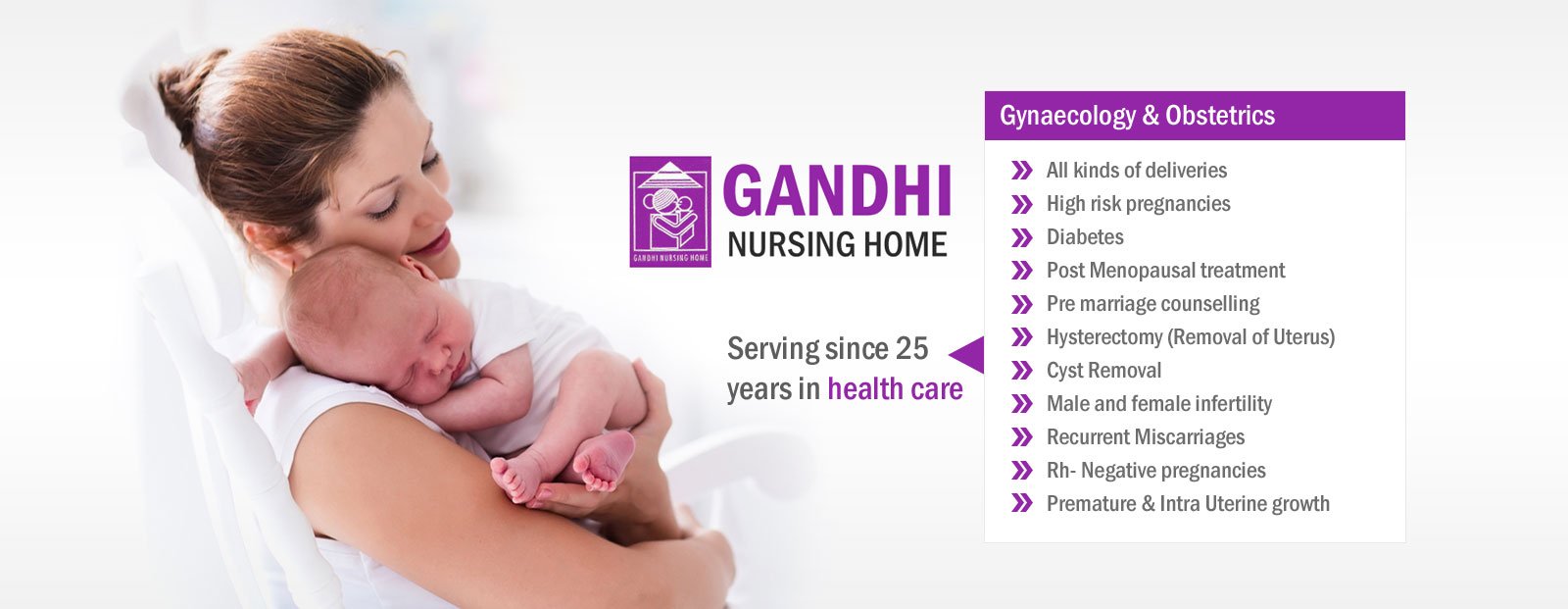
Gandhi Nursing Home in Nagpur started as a women care giving hospital and has evolved into a multispecialty medical centre with advanced surgical facilities. It was established 25 years ago, since 1989, with the aim of delivering accessible, high-quality health services in a focused and caring environment. The centre provides a range of Gynaecology & Obstetrics, maternity, fertility, infertility, and surgical healthcare services, supporting women through different stages of reproductive and maternal health. Patients can discuss pregnancy monitoring, delivery planning, high-risk pregnancy care, normal delivery, Caesarean delivery, and related women’s healthcare requirements with the appropriate medical team.
Women looking for maternity services can explore information about Best Maternity Hospitals and consult an appropriate Expert Gynecologist for individualized pregnancy and delivery guidance.
Role of an Experienced Gynaecologist in Delivery Planning
An Experienced Gynaecologist and obstetrician plays an important role in monitoring pregnancy, identifying potential risk factors, assessing fetal and maternal well-being, and developing an appropriate delivery plan. Regular antenatal care can help identify conditions that may influence the timing or mode of delivery.
Women can review information about choosing a Best Gynaecologist and understand what factors to consider when selecting maternity care.
Does IVF Pregnancy Always Require a C-Section?
No. Pregnancy achieved through IVF does not automatically require Caesarean delivery. The mode of birth depends on the same broad principles used for other pregnancies, including maternal health, fetal position, placental factors, gestational age, labour progression, fetal well-being, previous obstetric history, and other clinical considerations.
Patients receiving Advanced Fertility & IVF Treatment can discuss pregnancy and delivery planning with their obstetric care team once pregnancy is established.
Infertility Treatment and Future Pregnancy Planning
Some couples reach pregnancy after evaluation or treatment for infertility. Fertility care may involve assessment of both partners and, depending on the diagnosis, options such as IUI, IVF, surgical evaluation, or selected fertility procedures. Achieving pregnancy after infertility does not by itself determine the method of delivery.
Patients can explore Complete Infertility Solutions, Infertility Treatment, and IUI information as part of fertility planning.
Male and Female Infertility Evaluation
Female infertility and male infertility can have multiple causes. A complete fertility evaluation may consider ovulation, menstrual patterns, reproductive anatomy, ovarian reserve, sperm quantity and quality, and other relevant factors. Treatment planning should be individualized according to the findings.
Specialized procedures such as TESA and PESA sperm aspiration may be considered for selected male infertility cases where sperm retrieval is clinically indicated. Similarly, Laparohysteroscopy for Infertility Patients may be considered when evaluation suggests that an intrauterine or pelvic structural problem requires further assessment.
IVF, Egg Donation and Test Tube Baby Care
For couples requiring assisted reproductive care, IVF involves fertilization outside the body followed by transfer of an embryo into the uterus. Selected patients may also require donor eggs or specialized reproductive procedures depending on their diagnosis and fertility history.
Gandhi Nursing Home provides information related to Best IVF Centre, Best Test Tube Baby (IVF) Centre, and the Cocoon Test Tube Baby Centre. Patients considering donor-assisted fertility can also learn about Egg Donation and discuss eligibility, evaluation, counselling, and applicable procedures with fertility specialists.
Irregular Periods and Pregnancy Planning
Irregular periods can sometimes indicate problems with ovulation or other reproductive health concerns. They do not necessarily mean infertility, but persistent irregular cycles may justify medical evaluation, particularly when a woman is trying to conceive.
Information about Irregular Periods and Their Impact on Fertility can help women understand why menstrual cycle patterns may be relevant during fertility planning.
Other Women’s Health Concerns and Pregnancy Care
Comprehensive women’s healthcare extends beyond pregnancy and delivery. Conditions such as heavy menstrual bleeding, menstrual cramps, breast lumps, menopause-related concerns, and reproductive health problems may require separate evaluation.
Women can explore information about Heavy Menstrual Bleeding Treatment, Breast lump Treatment, and Menopause Treatment when seeking appropriate women’s healthcare information.
How Can Pregnant Women Prepare for Delivery?
Good maternity care involves more than deciding between vaginal delivery and Caesarean birth. Pregnant women can prepare by attending scheduled antenatal visits, completing clinically recommended assessments, maintaining pregnancy records, understanding warning signs, discussing previous pregnancy and surgery history, and asking questions about possible delivery scenarios.
- Attend regular antenatal appointments.
- Keep previous pregnancy and surgery records available.
- Discuss any previous C-section with the obstetrician.
- Understand the baby’s position during late pregnancy.
- Discuss any identified high-risk pregnancy factors.
- Ask when to reach the hospital after labour begins or warning signs develop.
- Understand hospital admission and delivery procedures.
- Check insurance and cashless maternity requirements in advance.
Frequently Asked Questions About C-Section Delivery
1. What is the most common reason for a C-section?
There is no single reason that applies to every pregnancy. Common indications include abnormal fetal position, concerns about fetal well-being, labour that does not progress, certain placental problems, previous uterine surgery, multiple pregnancy, and selected maternal or fetal conditions.
2. Does a high-risk pregnancy always require a Caesarean?
No. High-risk pregnancy means that closer monitoring may be required. Some women with high-risk pregnancies can have vaginal births, while others may require Caesarean delivery because of a specific complication.
3. Does IVF pregnancy always result in C-section?
No. IVF conception alone does not determine the route of delivery. The delivery plan is based on maternal and fetal factors, pregnancy progress, fetal position, placental condition, previous obstetric history, and other clinical considerations.
4. Does a previous C-section mean another C-section is unavoidable?
Not necessarily. Some women may be candidates for a planned vaginal birth after Caesarean, while others may be advised to have a repeat C-section. The decision depends on the previous uterine incision, previous delivery history, current pregnancy, and clinical circumstances.
5. Can a breech baby be delivered vaginally?
In selected circumstances, vaginal breech delivery may be considered, but it depends on several factors. The baby’s exact position, gestational age, maternal and fetal conditions, and the availability of an experienced maternity team all influence the decision.
6. Can labour problems lead to an emergency C-section?
Yes. If labour does not progress appropriately or if maternal or fetal well-being becomes concerning, the obstetrician may recommend Caesarean delivery depending on the clinical situation.
7. Is Caesarean delivery safer than vaginal delivery?
Neither route is universally safer for every pregnancy. Vaginal delivery may be appropriate in many pregnancies, while Caesarean delivery may be safer when specific complications are present. The appropriate route depends on individual circumstances.
8. What should I ask my gynaecologist about C-section planning?
Useful questions include whether there are any current risk factors, the baby’s position, the location of the placenta, whether vaginal delivery is appropriate, what circumstances could lead to Caesarean delivery, and how the hospital handles planned or urgent C-sections.
9. Are cashless C-section services available at every hospital?
Cashless services depend on the hospital’s network agreements, insurance policy, pre-authorisation, eligibility, and covered services. Patients should verify these details with the hospital and insurer before admission.
10. When should a pregnant woman seek urgent medical attention?
Heavy bleeding, severe abdominal pain, significant reduction in fetal movements, leakage of fluid, severe headache with visual changes, breathing difficulty, or other sudden concerning symptoms should be assessed promptly by a qualified healthcare professional.
Understanding Why Caesarean Delivery May Be Recommended
A Caesarean delivery may be recommended for many different reasons, including fetal position, placental complications, fetal well-being concerns, labour that does not progress, previous uterine surgery, multiple pregnancy, and selected maternal or fetal conditions. The need for a C-section should be determined through an individualized clinical assessment rather than assumptions based on a single symptom, pregnancy history, or fertility treatment.
For women planning maternity care, regular antenatal assessment and open communication with an Experienced Gynaecologist can help identify potential concerns and prepare an appropriate birth plan. Whether the final outcome is normal delivery or Caesarean delivery, the priority is appropriate care for the mother and baby according to the circumstances of the pregnancy.
Disclaimer: The information provided in this article is for educational purposes only and should not be substituted for professional medical advice, diagnosis, or treatment. Always seek the advice of your physician regarding any medical condition.